How to Start an Online Store in Pakistan: A Complete 2026 Guide

More Pakistanis are shopping online than ever before, and the barrier to opening your own store has never been lower. Whether you sell clothes, cosmetics, electronics, or homemade food, you no longer need a shop on the main road to reach customers — you need a well-built website and a plan. This guide walks you through exactly how to start an online store in Pakistan in 2026, step by step, from what to sell to how to get paid and delivered.
Key takeaways
- Pick a product with real demand before you build anything — validation beats guesswork.
- WooCommerce gives you full ownership; Shopify gets you live fastest. Both work well in Pakistan.
- Cash on Delivery is still king, but offering bank transfer and cards lifts trust and cash flow.
- Reliable delivery and a clear return policy matter as much as the website itself.
- A professional store can be launched from around Rs. 199,999 — and pays for itself with the right marketing.
Why now is the right time to sell online in Pakistan
Pakistan has one of the fastest-growing internet populations in the world, and smartphone shopping has become an everyday habit. Customers who once only bought from physical shops now compare prices, read reviews, and place orders from their phones — often late at night, long after your shop would have closed. An online store lets you serve them around the clock and reach buyers far beyond your own neighbourhood or city.
Just as importantly, the tools have matured. You no longer need a large budget or a technical team to run a store. With the right platform and a professional build, a small business in any city can accept orders, take payments, and arrange delivery nationwide. The businesses that move online now — while many competitors are still selling only through Facebook comments and WhatsApp — are the ones building a real, lasting advantage.
Step 1: Decide what to sell — and check there’s demand
Every successful store starts with a product people actually want. If you already run a business, this step is easy — sell what you sell now, online. If you’re starting fresh, choose a category you understand and can source reliably. The most important thing is to validate demand before you invest: search for your product on Google and Daraz, look at how many sellers already offer it, and check whether people are actively searching for it.
A healthy amount of competition is a good sign — it means customers are buying. What you want to avoid is a product nobody is looking for. Talk to potential customers, run a small test batch, or take pre-orders through your social media before committing to large stock. Starting narrow with one strong product line is far better than launching with a scattered catalogue you can’t manage.
Step 2: Pick your platform — WooCommerce or Shopify
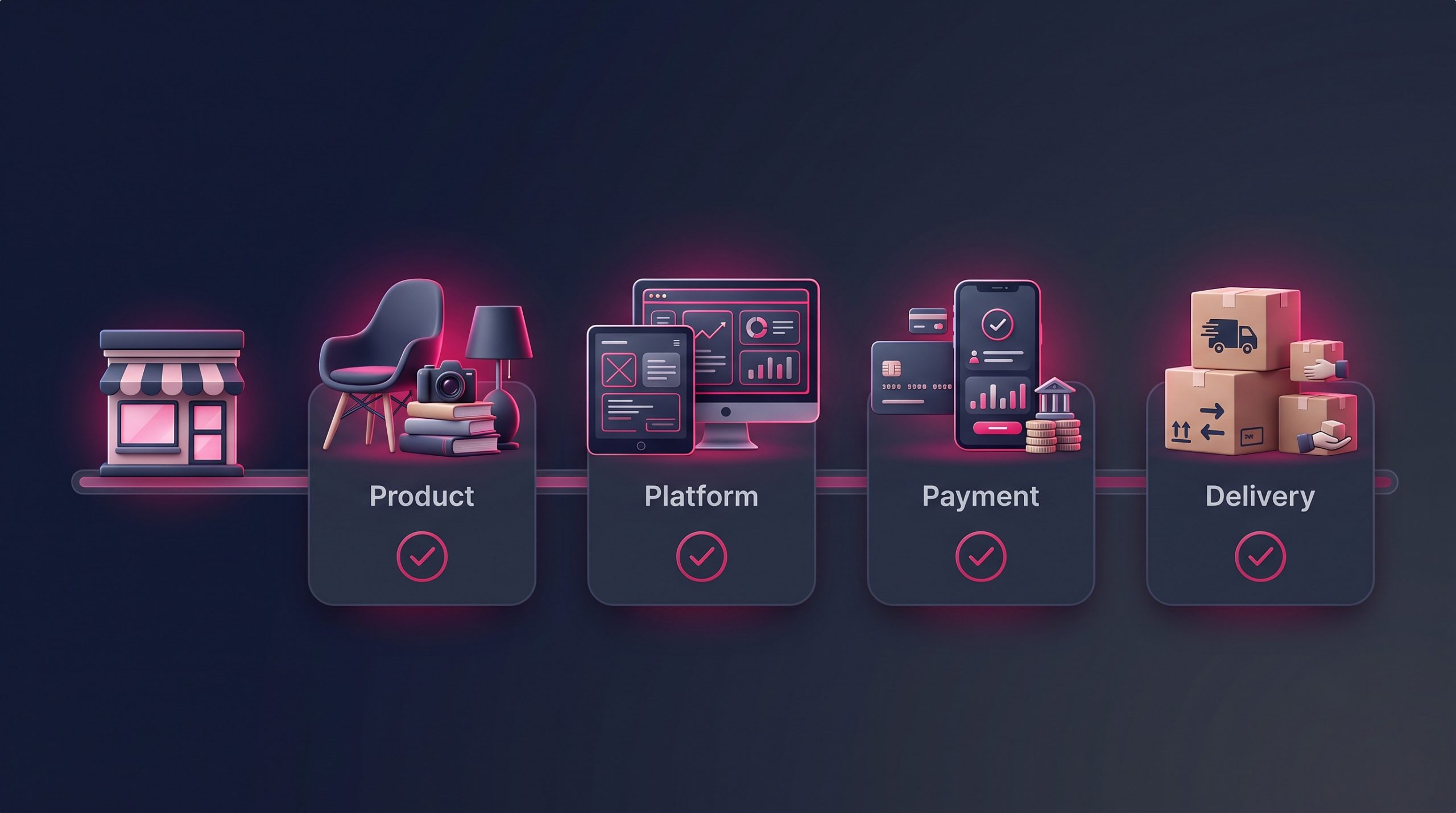
Your store needs a platform to run on, and for most Pakistani businesses the choice comes down to two: WooCommerce or Shopify. WooCommerce runs on WordPress, which means you own your store outright with no monthly platform fees and total control over how it works. It’s the best choice if you want to keep costs low over time and grow without limits.
Shopify is a hosted platform with a monthly subscription. In return you get a reliable, secure store that’s quick to launch and famously easy to manage, with one of the best checkouts in the world. It’s ideal if you value speed and simplicity over owning the platform. Both handle Pakistani payment methods and delivery well — the right answer depends on your budget and how much you want to own versus rent. If you’re unsure, our e-commerce development team will recommend the honest best fit for your situation.
Step 3: Sort out payments — COD, bank transfer, and cards
Payments are where many new stores lose customers, so make it easy to pay the way your buyers prefer. In Pakistan that means offering more than one option. Cash on Delivery (COD) remains the most trusted and widely used method — many customers simply won’t buy any other way the first time they order from you. Bank transfer is popular for larger or repeat orders, and card payments through a gateway add convenience and credibility.
The best approach is to offer all three: COD to win first-time trust, bank transfer for those who prefer it, and cards for speed. A good store makes switching between them effortless at checkout, so nobody abandons their cart because their preferred method is missing.
A word on Cash on Delivery: COD is essential in Pakistan, but it comes with returns and the occasional fake order. Reduce both by confirming every order with a quick call or WhatsApp message before dispatch, and by writing clear product descriptions so customers know exactly what they’re getting.
Step 4: Plan delivery and returns
An online store is only as good as its delivery. Partner with an established courier that offers nationwide coverage, COD collection, and tracking — this is standard in Pakistan and most couriers integrate cleanly with a well-built store, printing labels and updating tracking automatically. Decide your delivery charges up front and display them clearly; hidden charges at checkout are one of the biggest reasons carts get abandoned.
Write a simple, fair return policy and put it where customers can find it. A clear return policy actually increases sales, because it removes the fear of buying something unseen. Handle the occasional return gracefully and you’ll turn a nervous first-time buyer into a repeat customer.
Step 5: Build the store the right way
Now the store itself. Whether you build it yourself or hire professionals, the essentials are the same: fast loading on mobile (where most of your customers are), clear product photos, honest descriptions, an obvious “Add to Cart” button, and a checkout that asks for as little as possible. Every extra second of load time and every unnecessary form field costs you sales.
Build in trust signals too — real photos, customer reviews, a working contact number, and a WhatsApp button. Pakistani shoppers are rightly cautious online, and small signs that a real, reachable business stands behind the store make a big difference to conversion. This is exactly where a professional build pays off: it’s designed to turn browsers into buyers, not just to look nice.
Step 6: Launch, then market relentlessly
Building the store is the start, not the finish. Customers won’t appear on their own, so plan how you’ll drive traffic from day one. The most effective combination for Pakistani stores is social media marketing on Facebook and Instagram to build awareness and run targeted ads, paired with SEO so people searching Google for your products find you over time. Collect customer phone numbers and emails from day one so you can bring buyers back with new offers.
Start with one or two channels you can do well rather than spreading yourself thin. Consistency beats intensity: a steady stream of good posts, a few well-targeted ads, and prompt replies to every enquiry will grow a store faster than an occasional burst of activity.
How much does it cost to start?
A professional online store in Pakistan typically starts from around Rs. 199,999 for a full build with unlimited products, Cash on Delivery, card payments, hosting, and order management included for the first year. That’s a real investment, but a proper store is a sales channel that works every hour of every day — and one good month of online orders often covers the cost. You can see transparent options on our pricing page, or read our detailed guide to what an e-commerce website costs in Pakistan.
Ready to open your online store?
We build fast, conversion-focused online stores for Pakistani businesses — on WooCommerce or Shopify, with COD and card payments built in, and full ownership handed to you.
The bottom line
Starting an online store in Pakistan is no longer a technical challenge reserved for big companies — it’s a practical step any serious business can take. Get the fundamentals right: sell something people genuinely want, choose the platform that fits your budget and plans, make it easy to pay and simple to receive, and build a fast, trustworthy store. Then treat launch as the beginning rather than the finish, and market consistently. Do that, and your store becomes a sales channel that works every hour of every day, reaching customers your physical shop never could — across your city and the whole country.
Frequently asked questions
Do I need a registered company to start an online store in Pakistan?
No, you can start selling as a sole proprietor. However, registering your business and getting a business bank account makes it easier to accept card payments through a gateway and builds trust with customers and suppliers as you grow.
How long does it take to build an online store?
A professional store usually takes four to six weeks from kickoff to launch, depending on how many products you have and how quickly you provide photos and content. Simpler stores can go live sooner.
Can I start small and add products later?
Yes, and you should. Launch with a focused range you can manage well, then add products as you learn what sells. A well-built store lets you add items, categories, and features at any time without a rebuild.
Related articles

Dropshipping in Pakistan: An Honest Guide
An honest look at dropshipping in Pakistan — how it works, the real challenges, and how to decide if it's right for…
How to Get Your First 100 Orders on a New Online Store
The hardest orders are the first 100. A practical Pakistan playbook to win them — your network, social media, ads, Cash on…
How to Reduce Cart Abandonment on Your Online Store
Most shoppers abandon their carts. Here's why Pakistani buyers drop off at checkout and exactly how to recover those lost sales.