How to Choose the Right E-Commerce Platform in Pakistan
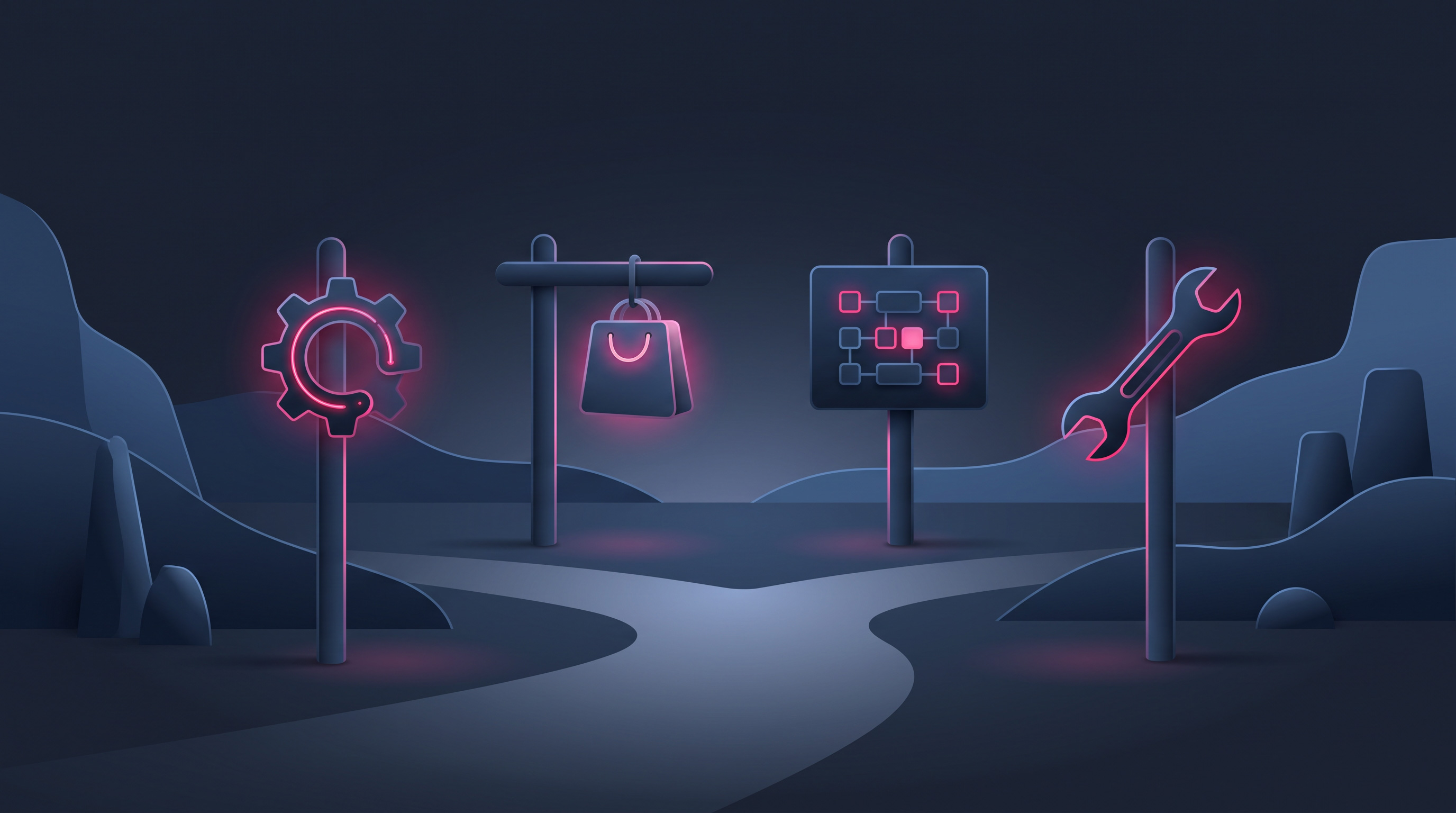
Choosing the platform your online store runs on is one of the most important early decisions you’ll make — it shapes your costs, your control, and how easily you can grow. Yet most Pakistani business owners pick based on whatever they heard first. This guide compares the real options — WooCommerce, Shopify, custom builds, and marketplaces — in plain terms, so you can choose the platform that fits your budget and ambitions rather than someone else’s.
Key takeaways
- There’s no single “best” platform — only the best fit for your budget and needs.
- WooCommerce gives full ownership and no monthly platform fee; you manage more.
- Shopify is fastest to launch and low-maintenance, but charges a monthly fee.
- Marketplaces like Daraz get you traffic but take a cut and own the customer.
- Owning your own store almost always wins over the long term.
Why the platform choice matters so much
Your platform is the foundation everything else sits on. It determines what your store can do, how much it costs to run each month, how much control you have over design and data, and how painful it is to make changes later. Switching platforms after launch is possible but disruptive, so it’s worth getting the decision right at the start rather than discovering the limits once you’re busy taking orders.
The good news is that the choice usually comes down to a few honest trade-offs: ownership versus convenience, upfront cost versus monthly cost, and control versus simplicity. Once you know where you sit on those, the right platform becomes obvious.
WooCommerce: full ownership, no platform fee
WooCommerce turns a WordPress website into a fully-featured online store. Its biggest strengths are ownership and cost: you own everything, there’s no monthly platform commission on your sales, and you can customise it almost without limit. For a business that wants to keep every rupee of every sale and retain total control, it’s hard to beat.
The trade-off is that you (or your developer) are responsible for hosting, updates, and security. That’s very manageable with the right setup or a maintenance plan, but it’s more hands-on than a hosted platform. WooCommerce suits businesses that value control and long-term cost savings, and that plan to grow a substantial catalogue.

Shopify: fastest to launch, low maintenance
Shopify is a hosted platform, which means it handles the hosting, security, and updates for you. That makes it the quickest, lowest-hassle way to get a professional store live, and it’s especially attractive if you’d rather focus on selling than on managing technology. It’s also well-suited to selling internationally, which matters if you’re targeting the Pakistani diaspora abroad.
The trade-off is a monthly subscription fee, and less control than a self-hosted store. For many businesses that convenience is well worth the cost. If you want a deeper look at whether the fees stack up, our comparison of WooCommerce vs Shopify for Pakistani businesses weighs both in detail.
The honest rule of thumb: if you want the lowest running cost and maximum control, lean WooCommerce. If you want the fastest launch with the least maintenance, lean Shopify. Both are excellent — the “wrong” choice is usually renting space on a marketplace and calling it your store.
Marketplaces (Daraz, Instagram): traffic, but not ownership
Selling on Daraz or through an Instagram page is a common starting point, and there’s nothing wrong with it as a first step — the built-in audience is real. But it comes with a cost that’s easy to miss: the marketplace takes a commission on every sale, controls the customer relationship, and can change its rules or fees whenever it likes. You’re building someone else’s business as much as your own.
The smart play for most sellers is to use marketplaces for discovery while building your own store as the place you actually own. Every customer you move from a marketplace to your own website is one whose repeat business — and data — belongs to you. That shift is often the single biggest lever on long-term profit.
Custom builds: when you’ve outgrown the templates
Some businesses have needs that off-the-shelf platforms can’t cleanly handle — unusual pricing rules, deep integration with an existing inventory or accounting system, a multi-vendor marketplace, or a subscription model. In those cases a custom or heavily-extended build is the right answer, giving you exactly the functionality your business runs on.
Custom work costs more and takes longer, so it’s rarely where you should start. But when your business genuinely needs it, forcing your operations into a template you’ve outgrown costs more in the long run than building the thing properly. A good developer will tell you honestly whether you’ve reached that point or whether a standard platform will still serve you well.
Don’t forget the ongoing running costs
When comparing platforms, look past the build cost to what each one costs you every month, because that’s what adds up over the years. A self-hosted WooCommerce store has hosting and maintenance costs but no platform commission on sales — so as your revenue grows, your platform cost stays roughly flat. Shopify charges a predictable monthly subscription that covers hosting and security, which many owners happily pay for the convenience. Marketplaces look free to join but take a percentage of every single sale, which quietly becomes your largest cost once volume grows.
The right lens is total cost over two or three years, not just the price to launch. A platform that’s cheap to start on but takes a cut of every order can end up far more expensive than one with a higher upfront cost and no ongoing commission. Map out your expected sales and do that simple maths before you commit — it often changes the decision, especially for businesses that plan to scale.
The bottom line
Choose your platform on the trade-offs that matter to you: WooCommerce for ownership and low running costs, Shopify for speed and simplicity, marketplaces for early discovery, and custom builds only when you’ve genuinely outgrown the rest. Whatever you pick, aim to own your store rather than rent it. If you’re not sure which fits your business, that’s exactly the kind of thing we help Pakistani sellers decide — starting from a proper look at the full guide to starting an online store.
Not sure which platform is right for you?
Tell us what you sell and how you want to grow, and we’ll recommend the platform that fits — then build the store on it. Honest advice, a clear quote within 24 hours, and no jargon.
Frequently asked questions
Is WooCommerce or Shopify better for a Pakistani business?
Both are excellent. WooCommerce gives full ownership and no monthly platform fee but needs more hands-on management; Shopify is faster to launch and low-maintenance but charges a subscription. Choose based on whether you value control and low running costs (WooCommerce) or speed and simplicity (Shopify).
Should I sell on Daraz or build my own store?
Ideally both — use Daraz for discovery while building your own store as the asset you own. Marketplaces bring traffic but take a commission and control the customer relationship. Moving repeat customers to your own website keeps the profit and the data with you.
Do I need a custom-built store?
Usually not at the start. Standard platforms like WooCommerce and Shopify cover the vast majority of needs. A custom build makes sense only when you have specific requirements — unusual pricing, deep system integrations, or a multi-vendor model — that templates genuinely can’t handle.
Can I switch platforms later?
Yes, but it’s disruptive — products, customers, and orders all need migrating, and links can break. It’s much better to choose a platform that fits your plans from the start. If you do need to move later, it’s a manageable project with the right help, just not something to do casually.
Related articles

Dropshipping in Pakistan: An Honest Guide
An honest look at dropshipping in Pakistan — how it works, the real challenges, and how to decide if it's right for…

How to Get Your First 100 Orders on a New Online Store
The hardest orders are the first 100. A practical Pakistan playbook to win them — your network, social media, ads, Cash on…
How to Reduce Cart Abandonment on Your Online Store
Most shoppers abandon their carts. Here's why Pakistani buyers drop off at checkout and exactly how to recover those lost sales.