Social Media vs a Website: Why Your Business Needs Both
“We already have a Facebook page — why do we need a website?” It’s one of the most common questions Pakistani business owners ask, and it’s a fair one. Social media is free, everyone’s already there, and plenty of businesses sell well from a phone. But social and a website do genuinely different jobs, and the businesses that grow steadily tend to use both. Here’s an honest look at social media vs a website, and why the answer is usually “both”.
Key takeaways
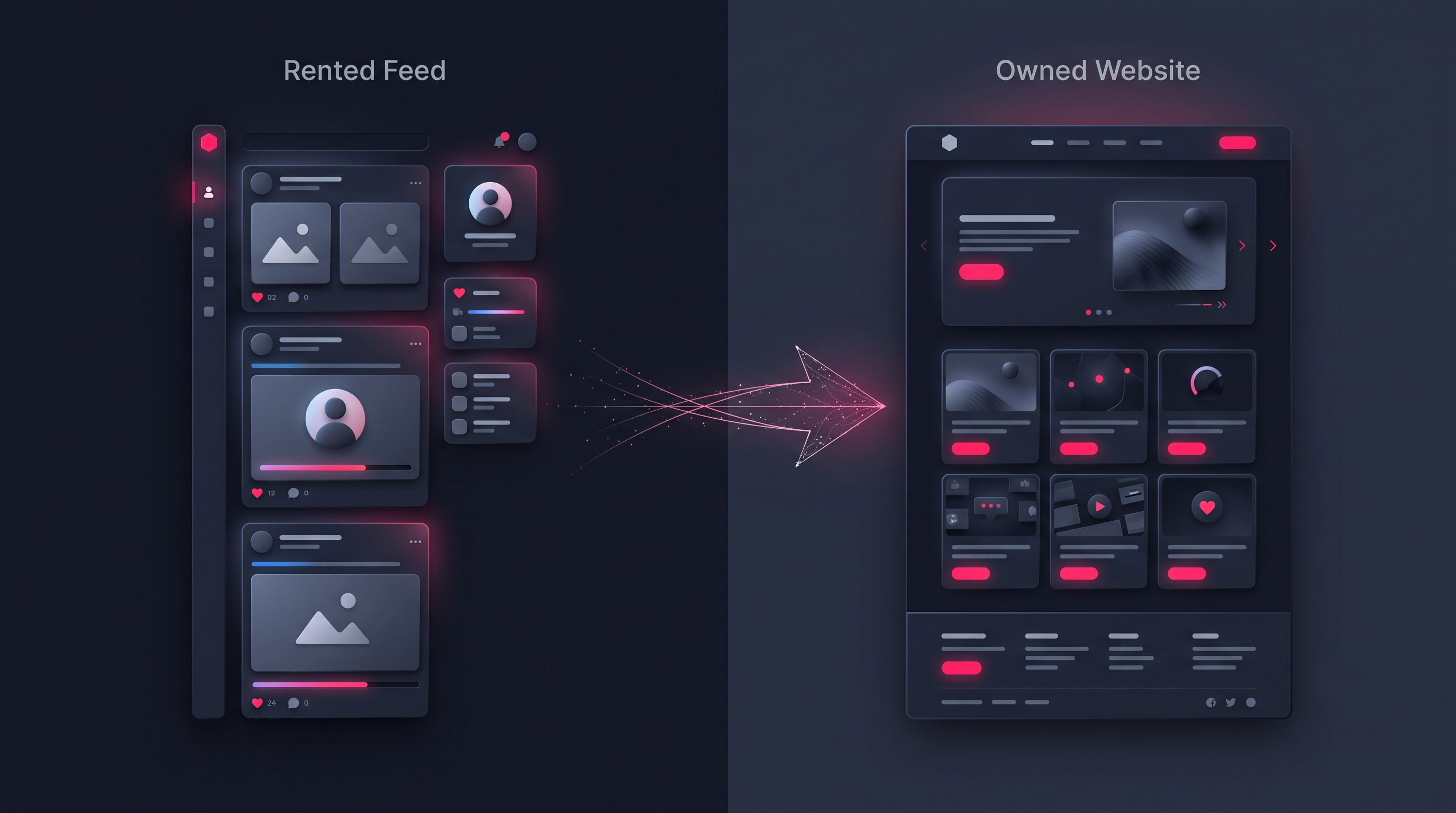
- Social media is rented ground; a website is the only online asset you actually own.
- Social is best at attention and discovery; a website is best at trust and conversion.
- Only a website earns you Google traffic from people actively searching to buy.
- Paid ads convert far better when they point at a proper page, not a profile.
- Use social to attract and a website to convert — they’re partners, not rivals.
The real difference between the two
The simplest way to think about it: social media is where people discover you, and a website is where they decide about you. On Instagram or Facebook, someone stumbles across your product while scrolling for entertainment — they weren’t looking for you. On your website, they’ve usually arrived on purpose, often from a Google search, ready to evaluate whether to buy. Those are two completely different moments in a customer’s journey, and they need different tools.
There’s a second difference that matters even more over time: ownership. Your social pages sit on land you rent from a company that can change the rules, throttle your reach, or suspend your account without warning or appeal. Your website sits on a domain and hosting in your name. One is borrowed, one is yours — and that distinction quietly decides how secure your business really is.
What social media does brilliantly
Let’s be fair to social, because it’s genuinely powerful. It’s free to start, it’s where enormous numbers of Pakistanis spend their time, and it’s unmatched at getting you discovered by people who weren’t looking. A single good Reel can put your business in front of thousands with no ad spend. Nothing else offers that kind of organic reach to a small business.
It’s also brilliant at personality and trust-building. Stories, comments, and direct messages let customers see the humans behind the business and talk to you instantly — which suits how people here prefer to buy. For building an audience, showing your work, and staying top of mind, social is the best tool available. The mistake isn’t using social; it’s using only social.
What only a website can do
First, it makes you findable on Google. When someone types “web designer in Lahore” or “office furniture near me”, Google shows websites — not Instagram profiles. That’s search traffic from people actively looking to buy right now, and without a website you’re simply absent from it. This is the single biggest thing social cannot replace.
Second, it gives you credibility and space. A proper website signals that you’re an established business rather than someone selling from a phone. It gives you room to explain your services properly, show your full range, publish prices, answer objections, display reviews, and let people buy or enquire without messaging you first. Plenty of serious buyers — especially B2B and higher-value customers — will quietly rule you out if they can’t find a real website.
Third, it converts far better, particularly for paid traffic. Sending ad clicks to a profile means the visitor lands somewhere with no clear next step and wanders off. Sending them to a page built around that exact offer, with the details and an obvious way to act, turns far more of the same spend into enquiries. If you advertise at all, a website makes your budget work harder.
The risk of building only on rented ground
This is the part business owners underestimate until it happens to them. Accounts get hacked, restricted, or disabled — sometimes by mistake, with no human to appeal to. Reach gets throttled as platforms push more paid content. Audiences drift as attention moves to whatever is new. If your entire customer base lives inside one app you don’t control, every one of those events is an existential problem rather than an inconvenience.
A website changes that maths. Your pages, your content, and your customer contact details stay yours regardless of what any platform decides. If a social account disappears tomorrow, a business with a website and an email or WhatsApp list still has a way to reach its customers. That’s not pessimism — it’s basic insurance for something you’ve spent years building.
A useful test: if your Facebook and Instagram accounts vanished overnight, could customers still find you and could you still reach them? If the honest answer is no, that’s the gap a website fills.
Google traffic: the customers social never sends you
Social media reaches people while they’re being entertained. Google reaches people at the exact moment they’ve decided they need something and are looking for someone to provide it. Those are the highest-intent customers there are, and they behave completely differently — they compare, they’re ready to spend, and they often contact only the first two or three businesses they find.
You cannot access that traffic without a website. Every day, people in your city search for exactly what you sell, and every one of those searches goes to a competitor who has a site. Over months and years, that compounds into an enormous amount of lost business — quietly, without you ever seeing it happen. A website with decent SEO is how you start capturing it.
How the two work together
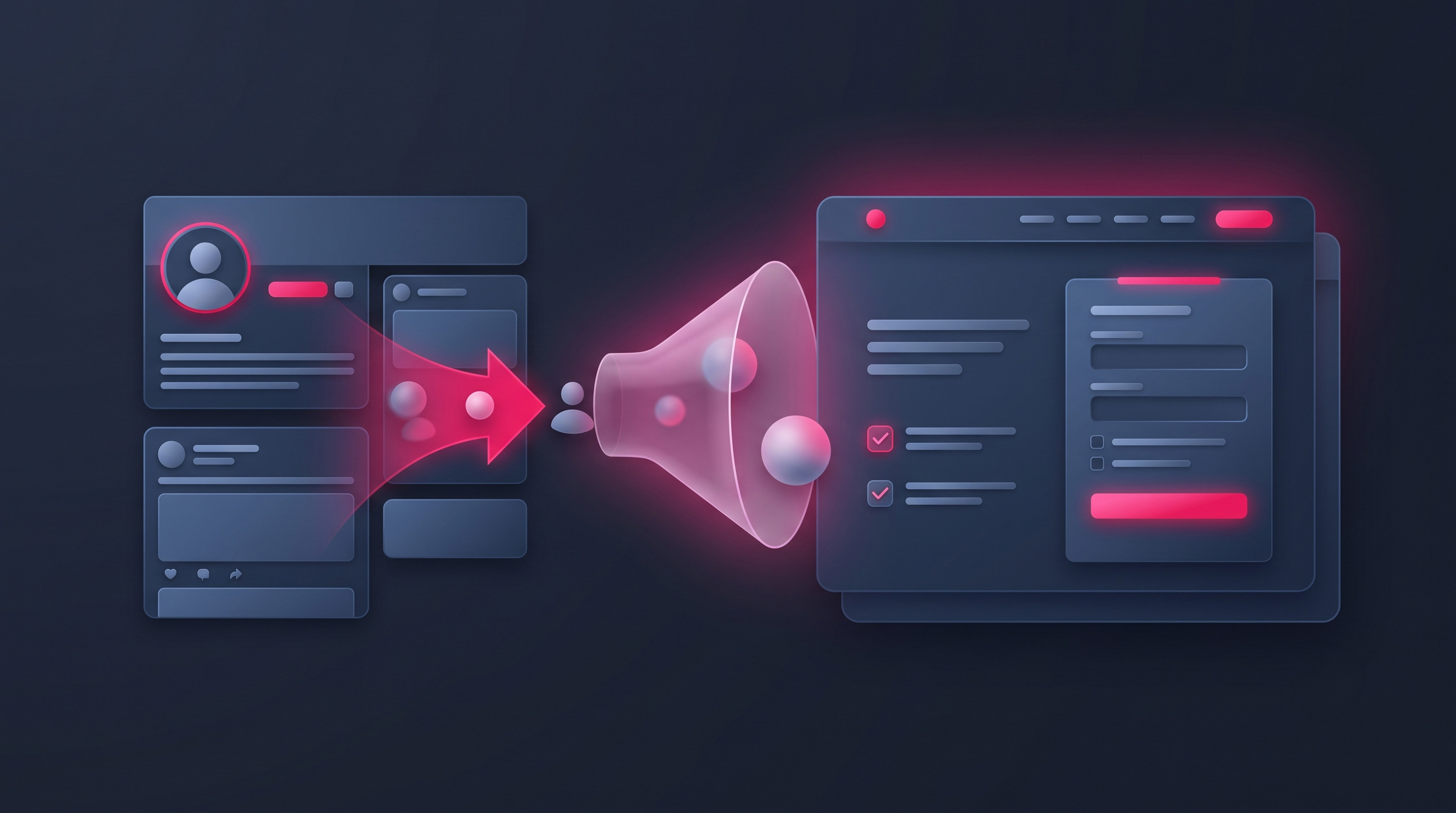
The businesses that do this well treat social and their website as one system. Social does the attracting: Reels and posts get discovered, Stories build familiarity, and DMs handle quick questions. The website does the converting: it holds the full catalogue, the prices, the detail, the proof, and the enquiry forms — and it captures the buyers who’d never message you.
In practice that means your bio link always points to your site, your ads land on a real page, your best blog posts get shared to social, and your customer reviews appear in both places. Each channel feeds the other. Social grows the audience; the website turns that audience into revenue and keeps it safe from any single platform’s decisions.
“What if I can only afford one right now?”
That’s a real constraint, and the honest answer depends on your stage. If you’re just starting, testing whether people want your product, and have almost no budget, begin on social — it’s free and it’ll tell you quickly whether there’s demand. There’s no shame in starting there, and many good businesses do.
But treat it as a starting point, not a destination. The moment you have steady orders, you’re spending on ads, or you’re competing for customers who research before they buy, a website stops being optional. A professional site starts from around Rs. 49,999 and typically pays for itself through the Google traffic and higher ad conversion it unlocks. If you’re already making sales on social, that’s precisely the signal that it’s time.
The bottom line
Social media versus a website is the wrong framing — they’re not competitors, they’re partners doing different jobs. Social is the best discovery engine a small Pakistani business has ever had access to. A website is the only piece of your online presence you actually own, the only way to appear on Google, and the place where interest reliably turns into orders.
Use social to be found and to build a relationship. Use your website to be trusted, to be searchable, and to sell. Run them together and each makes the other more valuable — and your business stops depending on decisions made by a platform you have no say in.
Own your online presence
We build fast, professional websites for Pakistani businesses — the piece you own, that ranks on Google, and that turns your social following into real enquiries. From Rs. 49,999.
Frequently asked questions
My Facebook page brings plenty of orders — do I really need a website?
If social is already working, a website will usually multiply it rather than replace it. It captures Google searchers you currently never see, converts ad traffic far better, and protects you if your account is ever restricted. It complements what’s already working.
Isn’t a website expensive to maintain?
Ongoing costs are modest — mainly hosting and domain renewal, plus optional maintenance. Compared with what you’d spend on ads over the same period, a website is a small recurring cost for an asset that keeps working and that you own outright.
Can’t I just use a link-in-bio page instead?
A link-in-bio tool is better than nothing, but it’s another rented platform and it won’t rank on Google, hold your full catalogue, or carry the credibility of a real site. It’s a stopgap, not a substitute for something you own.
Which should I invest in first if I’m starting out?
Start on social to test demand cheaply. Once you have steady orders, are spending on ads, or are selling to customers who research first, add a website — that’s the point where it starts paying for itself.
Related articles
Social Media Content Creation for Pakistani Businesses
What to post, how to plan it, and how to make social media content that actually grows a Pakistani business.
The Complete Meta Ads Dashboard Explained (With Visuals)
Confused by Meta Ads Manager? This guide explains all 6 sections of the dashboard — performance, overview, conversions, audience, creative and budget…
8 Meta Ad Settings You Must Turn Off
Meta's default settings inflate your numbers, alter your creative and waste budget. Here are 8 specific Ads Manager settings to turn off…