How to Accept Online Payments in Pakistan
You can have the best products and a beautiful store, but if customers can’t pay you the way they want, you lose the sale. Payments are one of the most misunderstood parts of selling online in Pakistan — so here’s a clear, practical guide to how to accept online payments in Pakistan, which methods actually matter, and how to set them up so more orders make it all the way to your bank account.
Key takeaways
- The three methods that matter are Cash on Delivery, bank transfer, and card payments.
- COD builds first-time trust; bank transfer suits repeat and larger orders; cards add convenience.
- Offer all three at checkout so no customer leaves because their method is missing.
- Card payments need a payment gateway and usually a registered business bank account.
- Confirming orders before dispatch cuts down on returns and fake COD orders.
The three ways Pakistanis pay online
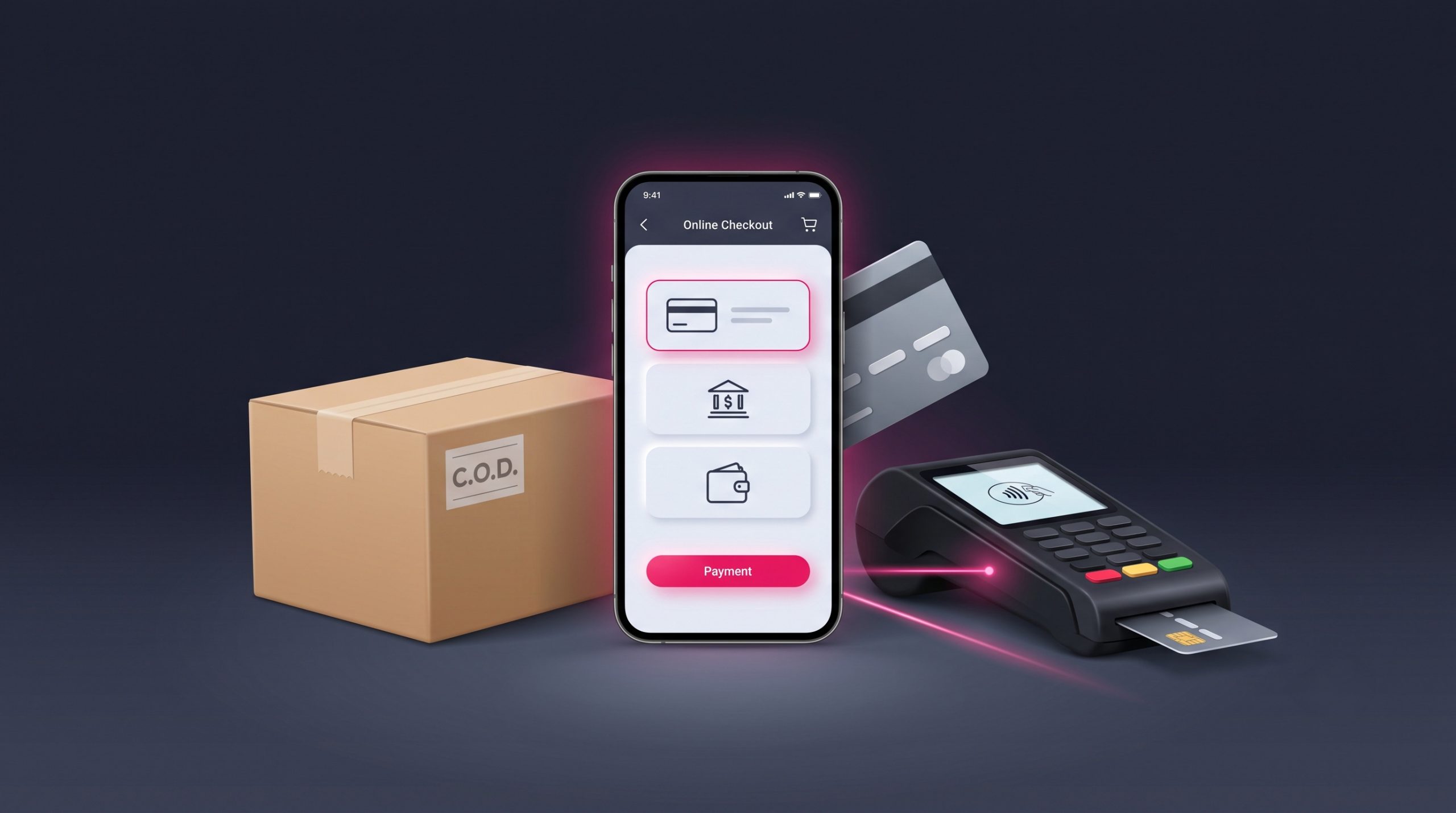
Despite all the talk of digital wallets and new fintech apps, the vast majority of online purchases in Pakistan still come down to three payment methods: Cash on Delivery, bank transfer, and card payments. A well-set-up store offers all three, because customers vary — the buyer who insists on COD for their first order will happily pay by card once they trust you. Forcing everyone down a single payment path is one of the quickest ways to lose sales.
Cash on Delivery (COD)
Cash on Delivery is still the backbone of e-commerce in Pakistan. The customer orders online and pays the courier in cash when the parcel arrives. It works because it removes all the risk for the buyer — they only pay once they’re holding the product. For a new store, offering COD is almost non-negotiable; many first-time customers simply won’t buy any other way until they trust you.
The courier collects the cash and transfers it to your account, usually within a few days, minus their charges. The downside is returns and the occasional fake order, which we’ll cover below — but for winning first-time trust, nothing beats COD.
Bank transfer
Bank transfer — usually through an app like your bank’s or a mobile wallet — is popular for repeat customers and larger orders. The buyer transfers the amount to your account and sends you a screenshot, and you dispatch once it’s confirmed. It costs you nothing in gateway fees and puts money in your account before you ship, which is great for cash flow. The catch is that it relies on manual confirmation, so it works best alongside, not instead of, other methods.
Card payments and gateways
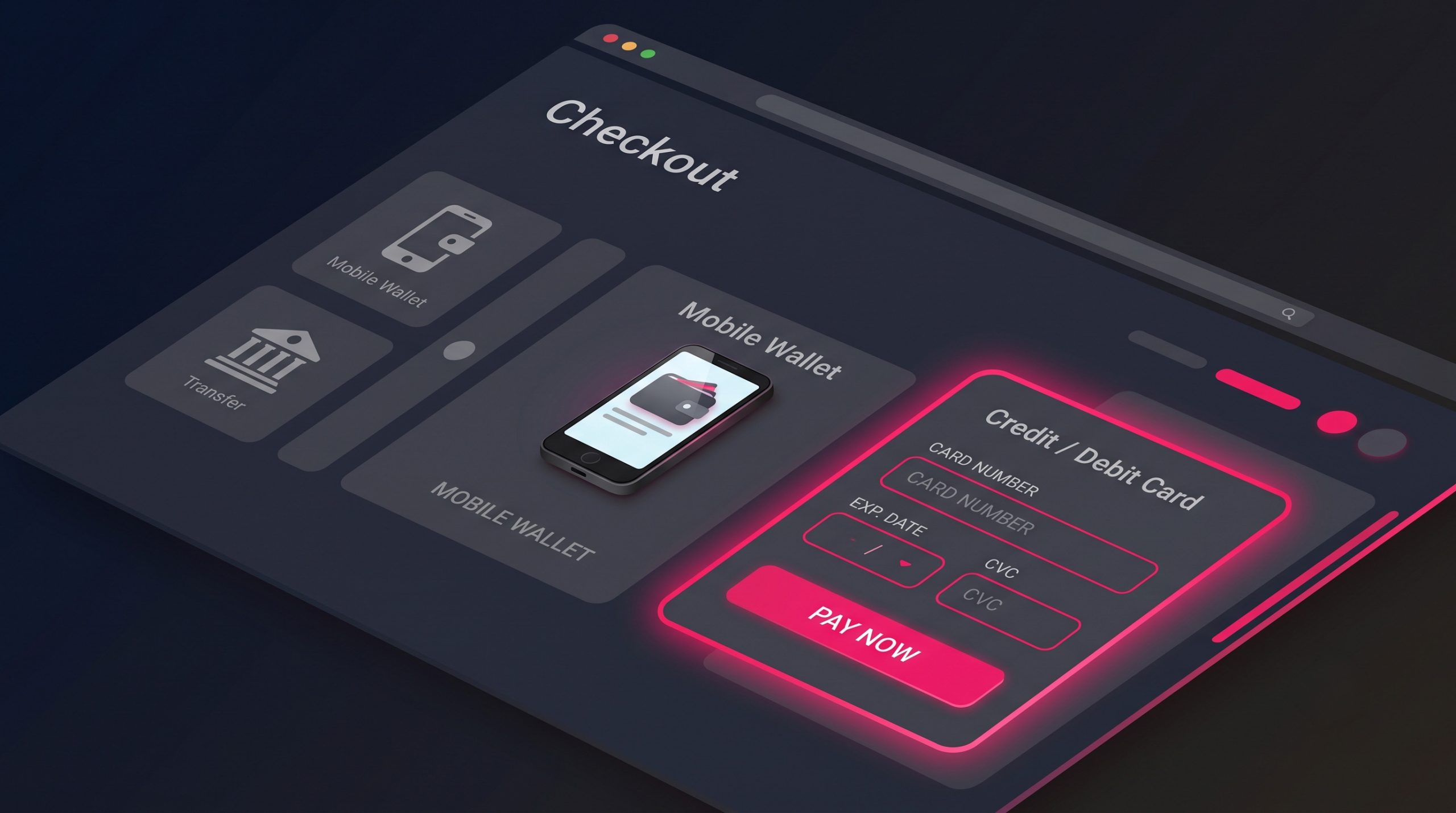
Card payments let customers pay instantly with a debit or credit card at checkout, without waiting for a courier or sending a screenshot. To accept them you connect your store to a payment gateway — a service that securely processes the card and deposits the money into your account, taking a small percentage per transaction. Setting this up usually requires a registered business and a business bank account, so it’s a step many stores add once they’re established rather than on day one.
Cards add real convenience and credibility, and they capture the growing number of shoppers who prefer to pay immediately. They pair perfectly with COD and bank transfer: offer all three, and you cover every kind of customer.
Registration tip: to accept card payments through a gateway, you’ll generally need your business registered and a business bank account in the company’s name. It’s worth doing early if online cards are important to you, as approval can take some time.
Reducing failed and fake orders
The biggest frustration with online payments in Pakistan — especially COD — is orders that get refused at the door or placed with fake details. You can’t eliminate this entirely, but you can cut it down sharply. Confirm every order with a quick call or WhatsApp message before dispatch: it filters out fake orders, catches wrong addresses, and gives the customer a moment of reassurance. Write clear, honest product descriptions and use real photos so buyers know exactly what’s coming and are less likely to refuse it.
For higher-value items, consider asking for partial advance payment by bank transfer, with the balance on delivery. It signals a serious buyer and protects you from the cost of a refused parcel. Over time you’ll learn which products and areas have higher return rates and can adjust accordingly.
What about digital wallets and mobile accounts?
Mobile wallets and app-based accounts have grown quickly in Pakistan, and a rising share of customers are comfortable paying straight from their phones. In practice, these usually flow into your store as a form of instant bank transfer or through a payment gateway that supports them, rather than as a completely separate checkout option. The key point is not to chase every new method but to make sure the ones your customers actually use are covered.
The safest approach is to start with the three core methods — Cash on Delivery, bank transfer, and cards — and watch how your customers pay. If a particular wallet keeps coming up in messages and calls, add it. Letting real customer behaviour guide you beats adding every option and cluttering your checkout with choices nobody uses.
Show your payment options the right way
How you present payment options is almost as important as which ones you offer. Nervous first-time buyers look for reassurance before they part with money, so display your accepted methods clearly — on product pages, in the cart, and at checkout. Small trust signals make a real difference: a visible phone number and WhatsApp button, a clear return policy, real product photos, and a note that orders are confirmed before dispatch all tell the customer a real, reachable business stands behind the store.
Keep the checkout itself short. Every extra field and every surprise charge is a reason to abandon the cart. Show delivery charges up front, let the customer pick their payment method in one tap, and ask only for the details you genuinely need to fulfil the order. A calm, clear, honest checkout converts far better than a clever one.
Setting it up on your store
On a well-built store, all three methods sit neatly at checkout, and the customer simply picks the one they want. COD and bank transfer are straightforward to enable. Card payments require connecting a gateway, which is a technical step best handled during the build. When we build an e-commerce store, we set up Cash on Delivery, bank transfer, and card gateway integration as standard, and configure courier integration so COD collection and tracking are automatic — so from day one your store can take money the way your customers actually pay.
Keeping payments safe and building repeat trust
Trust is what turns a one-time buyer into a regular customer, and payments are where trust is won or lost. Make sure your store runs on HTTPS (the padlock in the browser), so customers see it’s secure before they enter any details. Never store card numbers yourself — a proper payment gateway handles card data securely so you never touch it, which protects both your customers and you. These are standard on a professionally built store, but they’re worth insisting on.
After the sale, keep the trust going. Send a quick order confirmation, share the tracking number when you dispatch, and follow up to check the customer is happy. A buyer who had a smooth payment and delivery experience is far more likely to pay by card or advance transfer next time — which lowers your returns and improves your cash flow. Good payments aren’t just about taking money once; they’re about earning the right to take it again.
Let customers pay the way they want
We build online stores with Cash on Delivery, bank transfer, and card payments set up and ready — plus courier integration so orders and tracking just work.
The bottom line
Payments are where good intentions turn into real sales — or lost ones. In Pakistan the winning formula is simple: offer Cash on Delivery to earn first-time trust, add bank transfer for repeat and larger orders, and enable card payments for speed and credibility. Present those options clearly, keep your checkout short and honest, confirm orders before dispatch, and follow up after the sale. Get that right and you not only capture more first-time buyers, you turn nervous strangers into confident repeat customers who happily pay in advance next time. The method matters, but the trust you build around it matters more.
Frequently asked questions
Do I need a business account to accept online payments?
For Cash on Delivery and bank transfer, a personal account can work when you’re starting out. To accept card payments through a payment gateway, you’ll generally need a registered business and a business bank account.
How soon do I get the money from COD orders?
The courier collects the cash on delivery and remits it to your account, typically within a few working days, after deducting their delivery and COD charges. Exact timing depends on the courier you use.
Should a new store offer card payments right away?
Not necessarily. Many new stores launch with COD and bank transfer, then add a card gateway once the business is registered and established. Offering COD from day one matters far more than cards for winning your first customers.
Related articles

Dropshipping in Pakistan: An Honest Guide
An honest look at dropshipping in Pakistan — how it works, the real challenges, and how to decide if it's right for…
How to Get Your First 100 Orders on a New Online Store
The hardest orders are the first 100. A practical Pakistan playbook to win them — your network, social media, ads, Cash on…
How to Reduce Cart Abandonment on Your Online Store
Most shoppers abandon their carts. Here's why Pakistani buyers drop off at checkout and exactly how to recover those lost sales.