How Long Does It Take to Build a Website in Pakistan?
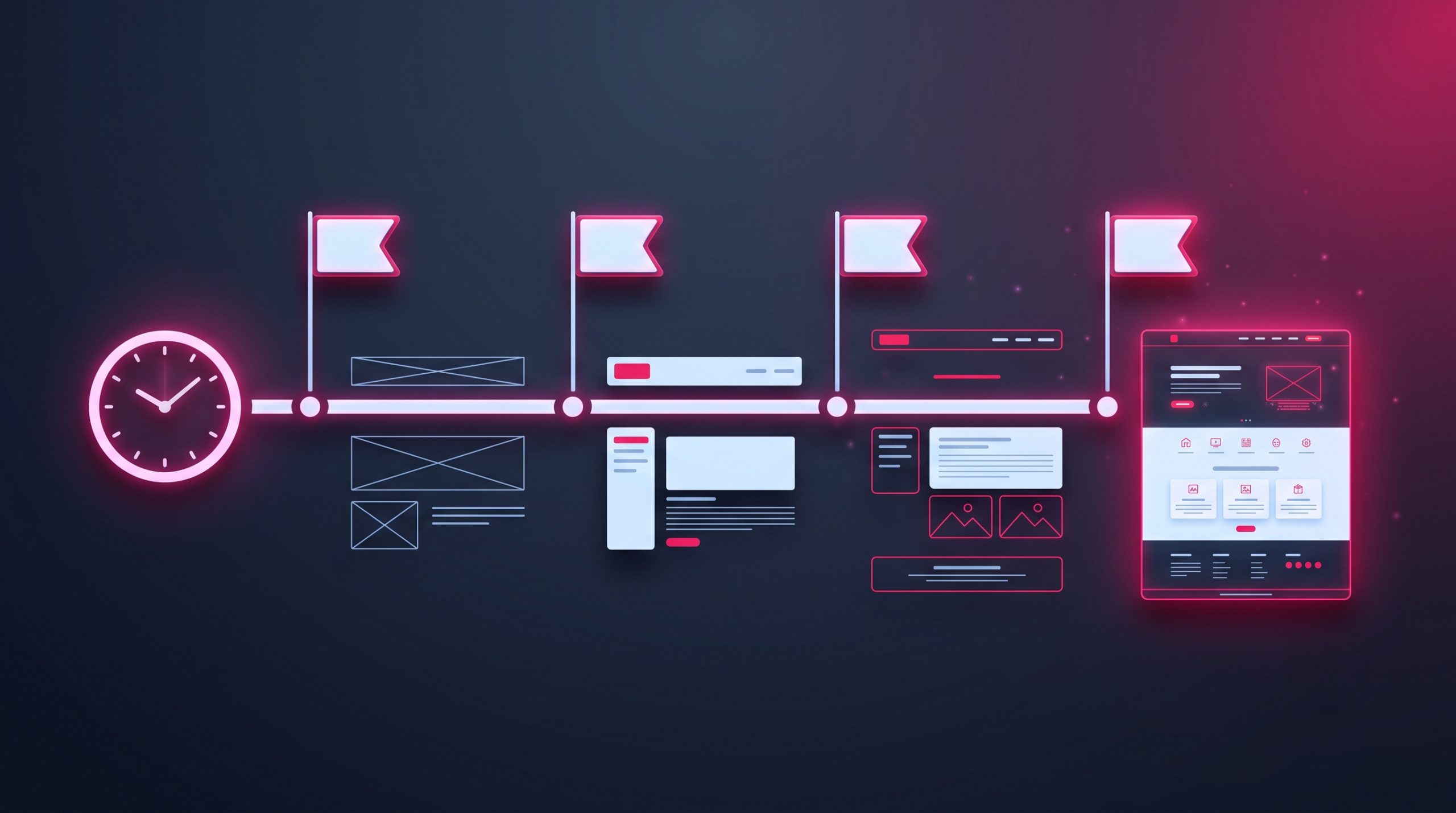
“How long will my website take?” is one of the first questions every business owner asks — and the honest answer is: it depends on the type of site and how prepared you are. Still, there are realistic timelines you can plan around. This guide breaks down how long it takes to build a website in Pakistan, what drives the timeline up or down, and how to make yours faster without cutting corners.
Key takeaways
- A simple business website typically takes 1–2 weeks; most standard sites take 2–4 weeks.
- Online stores and larger custom sites usually take 4–8 weeks or more.
- The biggest cause of delay is almost always the client’s content — text, images, and feedback.
- Being prepared and responsive is the single best way to get your website live faster.
Timelines matter because a website is often tied to a launch, a campaign, or a season you’re trying to hit. The frustrating truth is that many projects run late not because of the design work itself, but because of avoidable hold-ups. Understanding what actually takes time lets you plan realistically and keep your project on track.
Typical website timelines in Pakistan
Every project is different, but these ranges reflect what a professional build genuinely takes when both sides are organised. They assume the design and development are done properly — not rushed — and that content and feedback arrive on time.
| Website type | Typical timeline | What’s involved |
|---|---|---|
| One-page / landing site | 3–7 days | Single page, one clear goal |
| Standard business site | 2–4 weeks | 5–10 pages, custom design |
| WooCommerce / online store | 4–8 weeks | Products, payments, shipping |
| Large or custom site | 8+ weeks | Custom features, many pages |
If a provider promises a full custom business website in two or three days, be cautious — that usually means a rushed template job with little thought for your specific goals. Good work takes a sensible amount of time, though not as long as some agencies stretch it out to.
What actually happens during those weeks
It helps to see where the time goes, because a website isn’t built in one sitting — it moves through clear stages, each of which needs its own attention.
- Discovery and planning. Understanding your business, goals, and the pages you need. A day or two, and it shapes everything that follows.
- Content gathering. Collecting your text, images, and branding. This is the stage that most often causes delays.
- Design. Creating the look and feel and getting your approval before building.
- Development. Building the actual pages, making them responsive, and adding features like forms or a store.
- Review and revisions. Your feedback and the changes that follow.
- Testing and launch. Checking everything works on all devices, then going live.

What makes a website take longer
If a project runs over, it’s usually one of these reasons — and most of them are within your control:
- Content delays. By far the biggest one. If your text and images aren’t ready, the build simply can’t proceed, no matter how fast the team works.
- Slow feedback. Every round of review where approval takes a week adds a week to the project.
- Scope creep. Adding new pages or features mid-project naturally extends the timeline.
- Complex features. Online stores, booking systems, and custom functionality take longer than standard pages.
- Too many decision-makers. When several people must agree on every choice, decisions slow down dramatically.
The honest truth agencies rarely say out loud: most website delays are caused by the client, not the developer. Content that arrives late and feedback that trickles in over weeks are what turn a four-week project into a four-month one. The fastest projects are the ones where the client is prepared and responsive.
How to get your website built faster
You have more influence over the timeline than you might think. A few simple habits keep a project moving and can shave weeks off the finish date:
- Prepare your content early. Have your text, logo, photos, and key information ready before the build begins — ideally before you even start.
- Give feedback quickly and clearly. Consolidate everyone’s input into one clear response per round instead of drip-feeding changes.
- Agree the scope up front. Decide what the website includes before starting, so you’re not redesigning halfway through.
- Nominate one decision-maker. Have a single person with final say to keep approvals fast.
- Trust your professionals. Lean on your web team’s experience rather than debating every small design choice.
Ready to get your website live?
We deliver most business websites in 2–4 weeks with a clear, organised process — no endless delays, no surprises.
What you’ll need to provide
Because content is the number one cause of delay, the single most useful thing you can do is have your materials ready before the project starts. Gathering these in advance can genuinely cut a week or more off your timeline:
- Your logo in a good-quality format, plus your brand colours if you have them.
- Text for each page — or at least the key points, which a good team can help shape into polished copy.
- Photos of your work, products, team, or premises. Real images always beat generic stock photos.
- Your business details — address, phone, WhatsApp, email, and opening hours.
- Examples you like — a few websites whose style appeals to you, to guide the design direction.
Don’t worry if some of this isn’t perfect or complete — part of a professional’s job is to help you fill the gaps. But the more you bring to the table on day one, the faster and smoother the whole project runs.
What happens after your website goes live
Launch day isn’t the end of the story — it’s the start of your website actually working for you. A good build includes final testing across devices, connecting your site to Google so it can be found, and a short handover so you know how to make simple updates yourself. After that, a little ongoing care keeps it fast, secure, and current. Factor this into your thinking from the outset: a website is a living asset, not a one-time delivery, and planning for its upkeep is part of planning the project. If you’d like that handled for you, ongoing maintenance and support keeps everything running smoothly long after launch.
Why rushing a website usually backfires
It’s tempting to want your website live as fast as humanly possible, but there’s a floor below which speed becomes a false economy. A website built in a day is almost always a generic template with weak copy, no real strategy, and problems that surface later — costing you more time and money to fix than a properly paced build would have taken in the first place. The two-to-four-week range for a standard site exists because good design, clear content, and thorough testing genuinely need that time.
The right goal isn’t the fastest possible website — it’s the fastest possible good website. Come prepared, stay responsive, and work with a team that has an efficient process, and you’ll hit that sweet spot: a site that’s built well and live on a sensible schedule. You can see typical timelines and what’s included for each type of project on our pricing page, or explore our full web design service.
It also helps to remember that a website you’ll rely on for years is worth getting right rather than getting instant. A few extra weeks spent on clear content, thoughtful design, and proper testing is nothing compared to the months or years the site will serve your business afterwards. Judge the timeline against the lifespan of the result, and a sensible, well-run schedule is always the better deal.
Frequently asked questions
How long does a simple business website take to build?
A standard business website of five to ten pages typically takes two to four weeks, assuming your content is ready and feedback is timely. A single landing page can be done in a few days.
How long does it take to build an online store?
A WooCommerce or e-commerce store usually takes four to eight weeks, because there’s more to set up: products, payment methods, shipping rules, and thorough testing of the whole checkout flow.
Why is my website taking so long?
The most common reasons are late content, slow feedback, and added features after the project started. Providing everything up front and responding quickly to each review round is the best way to keep things on schedule.
Can you build a website quickly if I’m in a hurry?
Yes, we can prioritise urgent projects, especially simpler sites. The key is having your content ready and being available for quick approvals. Tell us your deadline and we’ll be honest about what’s realistic.
Plan your timeline with confidence
So, how long does it take to build a website in Pakistan? For most businesses, two to four weeks for a standard site and four to eight for a store — provided you come prepared and stay responsive. The timeline is a partnership: a good team moves fast, and an organised client keeps them moving. If you’ve got a launch date in mind, get in touch and we’ll map out a realistic plan to get your website live on time.
Related articles

10 Things To Do After Launching Your Website
Launching your website is the start, not the finish. Here are 10 essential things to do right after your site goes live…

How to Choose a Web Design Agency in Pakistan
How to choose a web design agency in Pakistan — the questions to ask, the ownership issue nobody mentions, and the warning…

10 Signs Your Website Needs a Redesign in 2026
10 signs your website needs a redesign in 2026 — dated look, slow speed, poor mobile, no enquiries, and more. Find out…