Does My Small Business Really Need a Website in 2026?
It’s a fair question, and it deserves an honest answer rather than a sales pitch. Plenty of Pakistani businesses run successfully on WhatsApp, a Facebook page, and word of mouth. So does a small business really need a website in 2026? For some, genuinely not yet. For most, the answer is yes — and this guide explains exactly how to tell which one you are, without anyone talking you into something you don’t need.
Key takeaways
- If customers search Google for what you sell, you’re invisible without a website.
- A website is the only online asset you actually own and control.
- It works around the clock, answering questions you’d otherwise answer by hand.
- Some businesses genuinely don’t need one yet — and that’s a legitimate answer.
- Costs start from around Rs. 49,999, far less than most owners assume.
The honest answer: it depends on how you get customers
Forget general advice and look at your own customer flow. If your customers find you by walking past your shop, by being referred, or through a social page you already run well, a website isn’t urgent today. If any meaningful share of them start by searching Google — or if you want customers beyond the people who already know you — then you need one, because that’s where you currently don’t exist.
That’s the whole test. Not “every business needs a website”, but: where do your next hundred customers come from, and can they find you there? The rest of this article helps you answer that clearly.
Reason 1: People search before they buy
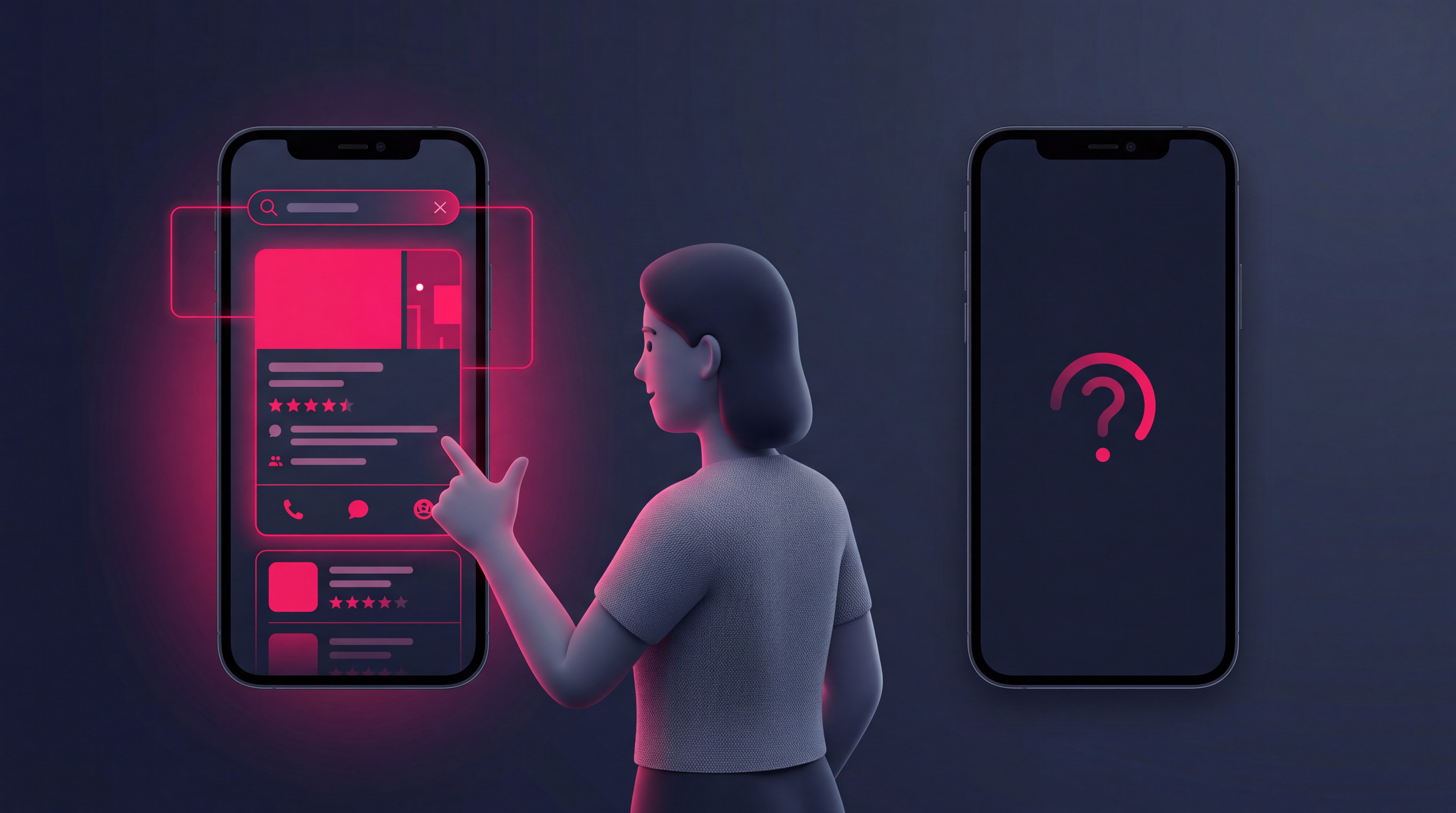
Behaviour has shifted permanently. Before choosing a dentist, a contractor, a supplier, or a boutique, people search — often on a phone, often with a location attached. “Near me” searches are now among the most common things typed into Google in Pakistan, and they come from people ready to act.
Google answers those searches with websites and business listings. If you have neither, you’re simply absent from that moment, and the customer picks a competitor who showed up. You never see this happen — there’s no notification for the business you didn’t win — which is exactly what makes it so easy to underestimate.
Reason 2: You own it, unlike your social pages
This is the argument most business owners haven’t considered. Your Facebook and Instagram pages sit on land you rent. The platform decides how many of your followers see your posts, can restrict or disable your account, and can change the rules whenever it likes — with no appeal and no warning.
Ask yourself: if your social accounts disappeared tomorrow, could customers still find you, and could you still reach them? For a business built entirely on a Facebook page, the honest answer is no. A website — with your domain and hosting in your name — is the one part of your online presence that can’t be taken away.
Reason 3: It answers questions so you don’t have to
Think about how much time you or your staff spend answering the same handful of questions on WhatsApp: what do you charge, what are your timings, where exactly are you, do you deliver to this city, do you have this in stock. Every one of those is answered once on a website and then answered forever, automatically.
It also catches the customers who never message at all. Plenty of people won’t start a conversation just to ask a price — they’ll quietly check a competitor whose website shows it. A website converts those silent browsers, the ones you currently lose without ever knowing they existed.
The credibility test: when you’re deciding whether to trust an unfamiliar business, you look them up. Your customers do the same to you. For higher-value purchases and B2B buyers especially, no website is often read as “not established yet”.
Reason 4: It makes everything else you do work harder
A website isn’t a separate channel competing with your social media — it’s what makes your social media convert. Send an ad’s clicks to a page built around that exact offer and far more of them become enquiries than if you send them to a profile with no clear next step. The same budget produces more customers.
The same applies to everything else: your visiting card, your shop signage, your WhatsApp status, your Google listing. They all become more effective when they lead somewhere that explains your business properly and makes it easy to get in touch.
When you genuinely don’t need one yet
Let’s be fair, because this matters. If you’re testing whether a business idea works at all, spending on a website before you know people want the product is premature — start on social, prove demand, then build. If you’re fully booked from referrals and don’t want more customers, a website solves a problem you don’t have.
And if your entire customer base genuinely lives on one social platform, is happy there, and you have no ambition beyond it, you can reasonably wait — as long as you accept the risk of building on rented ground. Anyone who tells you every single business needs a website today is selling, not advising.
The signs it’s time
There’s usually a moment when it stops being optional. You’re spending money on ads. Customers have started asking “do you have a website?” A competitor who looks less capable than you is winning work because they appear on Google. You’re selling to businesses rather than walk-in customers. Or you’re answering the same questions so often it’s eating your day.
Any one of those is the signal. They all point the same way: you’ve outgrown what a social page alone can carry, and the business is now losing more by not having a site than it would cost to build one.
What it actually costs
Most owners assume it’s far more than it is. A professional five-page website starts from around Rs. 49,999, and a ten-page WordPress site you can update yourself from Rs. 69,999 — both with full ownership handed to you. An online store with payments starts from Rs. 199,999.
Set that against the cost of being invisible on Google for another year, and against what you already spend on ads that convert worse than they could. For most small businesses it’s one of the cheaper meaningful investments available — and unlike advertising, it doesn’t stop working the moment you stop paying.
The bottom line
Does your small business need a website? If customers search for what you sell, if you’re spending on ads, if you sell to other businesses, or if you want to grow beyond the people who already know you — yes, clearly. If you’re still testing an idea or comfortably full from referrals, it can honestly wait a little longer.
But when you do build one, build it properly and make sure the domain, hosting, and files are in your name. A website isn’t a brochure you tick off a list — it’s the one piece of your business online that you own outright, that works while you sleep, and that nobody can switch off. Build it once, build it properly, and it keeps earning back its cost quietly for years afterwards.
Think it’s time for your website?
We build fast, professional websites for Pakistani small businesses from Rs. 49,999 — full ownership handed to you, and honest advice on whether you need one yet.
Frequently asked questions
Isn’t a Facebook page enough for a small business?
It’s a good start, but you don’t own it, it won’t appear in Google searches the way a website does, and reach is decided by the platform. Most businesses do best using social to attract attention and a website to convert it.
How much does a small business website cost in Pakistan?
A professional five-page site starts from around Rs. 49,999, and a ten-page WordPress site you can update yourself from Rs. 69,999 — both with full ownership handed to you. Online stores with payments start from Rs. 199,999.
Do I need technical skills to manage a website?
No. Built on WordPress with a visual editor, you can update text, images, prices, and pages yourself after a short walkthrough at handover. For anything structural you can call a developer, but routine changes don’t need one.
How long before a new website brings customers?
It converts existing traffic — from ads, cards, and social — immediately. Google traffic takes longer to build, typically showing movement over two to three months and strengthening from there, especially with local SEO and a Google Business Profile.
What should I have ready before starting a website project?
Less than you might think, but a few things speed it up enormously: your logo, ideally with the vector source files; a short description of what you do and who you serve; your contact details and opening hours; photographs of your work, products, or premises; and any prices you’re happy to publish. Content is almost always what delays a website project rather than the development itself, so gathering these before you start typically shortens the whole timeline by a couple of weeks.
Related articles
16 Essential Legal Documents for Building a Startup (Free Templates)
The 16 legal documents every startup needs — founder agreements, NDAs, IP assignment, SAFEs and more. Download a free, fillable Excel template…
8 Fundamental Financial Terms Every Executive Must Master
EBITDA, MRR, ROI, burn rate, runway, gross margin, net profit and ARR — the 8 financial terms every founder and executive should…
Starting a Truck-Dispatching Business? Here’s What Your Website Needs
What a truck-dispatching website needs to win US carriers — industry language, an online carrier packet, transparent fees, and real proof.