How to Build an Online Course (LMS) Website in Pakistan

Teaching online is one of the few things that genuinely scales: you record a course once and it can sell for years, to students anywhere, while you sleep. But most people start on a marketplace, hand over a cut of every sale, and never own the student relationship. This guide walks through how to build an online course website — a proper LMS — in Pakistan, from planning your courses to payments, video, certificates, and what it actually costs.
Key takeaways
- Your own platform means you keep 100% of revenue and own your student list.
- Plan the course structure before building anything — it shapes every other decision.
- Most course businesses run best on WordPress with a proven LMS engine.
- Never host course videos on your own web hosting — use a proper video host.
- Quizzes, certificates, and drip content turn a video library into a real course.
Why build your own platform instead of using a marketplace
Course marketplaces are easy to start on, and that’s their appeal. The trade-offs arrive later: they take a share of every sale forever, they own the relationship with your students, they set the pricing culture — often pushing heavy discounts — and your course sits alongside thousands of competitors, including free ones.
Your own platform inverts all of that. You keep the full course price, you hold the student list so you can sell your next course directly, you control pricing and presentation, and you build a brand rather than a listing. For anyone teaching seriously rather than experimenting, it’s the difference between renting a stall and owning a school.
Step 1: Plan your course structure first
Before anyone builds anything, get the teaching plan clear on paper. Decide what the student will be able to do by the end, then work backwards into sections and individual lessons. Keep lessons short and focused — one idea each — because long videos lose people and short ones create a satisfying sense of progress.
This planning drives every technical decision that follows. How many courses you’ll run, whether students buy individually or subscribe, whether lessons unlock over time, whether there are assessments or certificates — all of it flows from the structure. Skipping this step is the most common reason course platforms get built twice.
Step 2: Choose your LMS approach
For most course businesses in Pakistan, the practical answer is WordPress paired with a proven LMS engine such as LearnDash, Tutor LMS, or LifterLMS. You get a mature, well-tested system for courses, lessons, quizzes, and student management, on a platform you own outright with no per-sale commission — and you can manage it yourself afterwards.
A fully custom platform makes sense only for unusual requirements or very large scale — complex cohort logic, deep integrations, or tens of thousands of students. It costs considerably more and takes longer, so it should be a deliberate choice rather than a default. For a single flagship course or a growing academy, the WordPress route is almost always the sensible one.
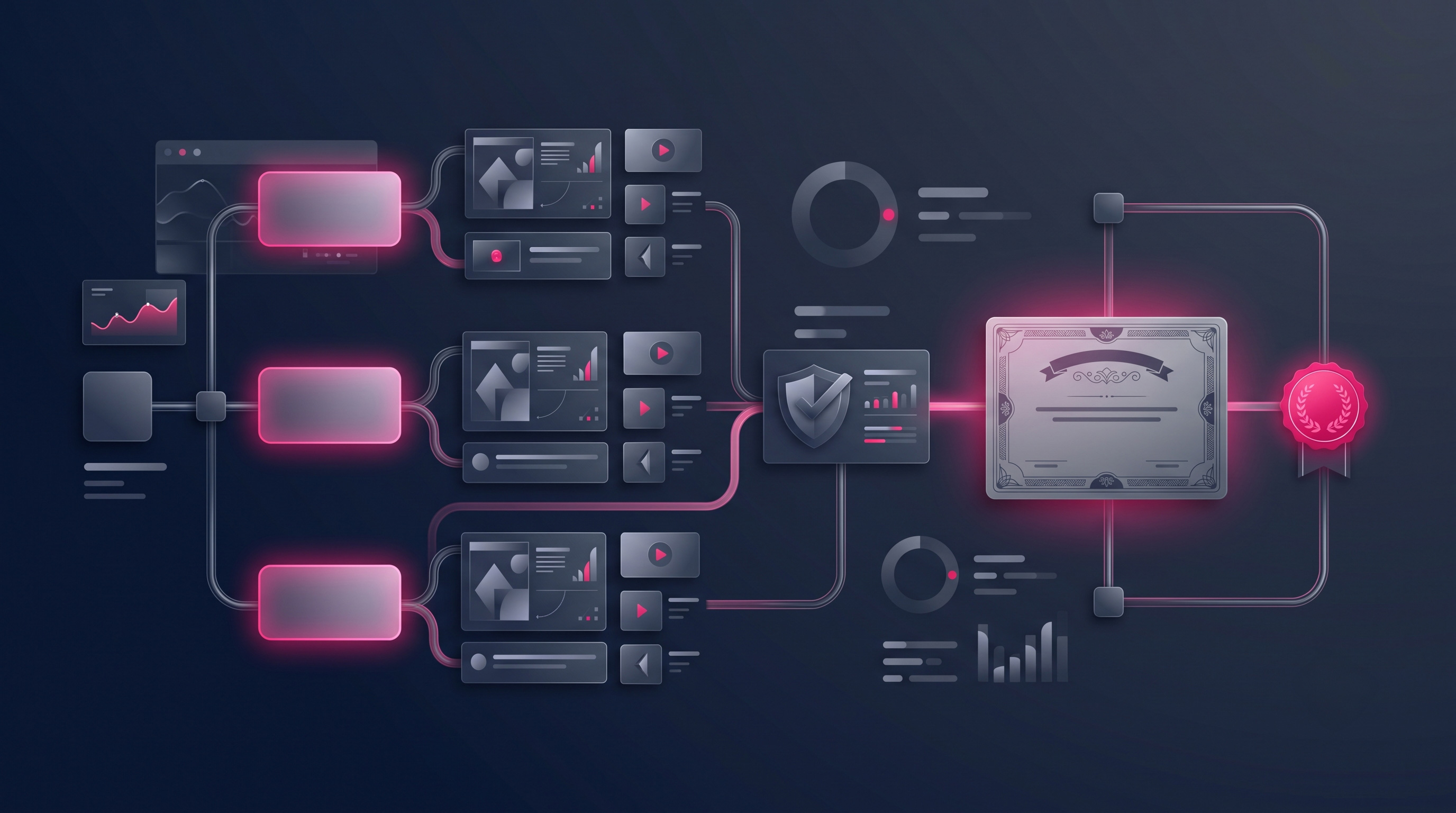
Step 3: Sort out video hosting properly
This is where new course creators most often go wrong. Do not upload course videos directly to your web hosting. Video files are large, ordinary hosting isn’t built to stream them, and the result is buffering, crashes, and a genuinely poor experience — especially on the mobile connections most Pakistani students will use.
Use a dedicated video host and embed the videos into your lessons. A proper video service handles streaming quality automatically, adjusting to each student’s connection speed, and offers privacy settings so your paid content can’t simply be shared publicly. It’s a small running cost that protects the entire student experience.
Design for mobile and patchy connections: many students will watch on a phone, sometimes on limited data. Short lessons, downloadable notes, and adaptive video quality matter more in Pakistan than fancy interactive features.
Step 4: Payments and enrolment
Decide how you’ll sell before you build. The common models are one-off purchase of a single course, bundles of related courses, or a membership giving access to everything for a monthly or annual fee. Memberships produce steadier income but require enough content to justify the ongoing charge, so most people start with individual courses.
On the payment side, offer what your students actually use. Card payments through a gateway are the natural fit for instant digital access, and bank transfer remains popular in Pakistan — though it needs a manual confirmation step before access is granted. Whatever you choose, enrolment should be automatic once payment clears, so students start immediately rather than waiting on you.
Step 5: Quizzes, certificates, and drip content
These features are what separate a real course from a folder of videos. Quizzes let students check their understanding and give you a way to require a pass mark before moving on. Assignments work well for practical subjects. Automatic certificates on completion are genuinely valued by students in Pakistan, who often want something to show an employer.
Drip content — releasing lessons on a schedule rather than all at once — is worth considering carefully. It improves completion rates by pacing students and reduces the risk of someone downloading everything and refunding. It suits structured programmes; it frustrates people who bought a reference course they wanted to binge. Match it to what you’re teaching.
Step 6: Get the student experience right
Students should log in and immediately see where they left off. A clear dashboard showing enrolled courses, progress through each one, and an obvious “continue” button does more for completion rates than any amount of extra content. Progress indicators are surprisingly motivating — people finish what they can see themselves finishing.
Completion matters commercially, not just pedagogically. Students who finish your course leave good reviews, buy your next one, and recommend you. Students who stall quietly ask for refunds. Small touches — a welcome email, a nudge when someone hasn’t logged in for a while, a place to ask questions — protect your revenue as much as your reputation.
What it costs to build
A focused single-course site or small academy typically starts around Rs. 150,000, covering the LMS setup, course and lesson structure, payment and enrolment, student dashboard, certificates, and a mobile-first design. Larger multi-instructor platforms with unusual requirements are scoped individually after a discovery conversation.
Budget for running costs too: hosting, your video hosting subscription, payment gateway fees on card transactions, and any LMS licence. They’re modest, and unlike a marketplace commission they don’t scale with your success — sell ten times as many courses and your costs barely move, which is precisely the point of owning the platform.
Launching and finding your first students
Building the platform is the easy half. Plan how you’ll get students before you launch, because a course website with no audience sells nothing. The reliable routes are the ones you likely already have: an existing social following, free content that demonstrates your teaching, and search traffic from people looking to learn your subject.
Publishing genuinely useful free material — short videos, articles, tips — is the most dependable way to build trust before asking for money. Combine that with SEO so people searching for your topic find you, and collect email addresses from day one so every future course launches to an audience that already knows you.
The bottom line
Building your own course platform takes more effort upfront than listing on a marketplace, and it’s worth it for anyone teaching seriously. Plan the course structure first, build on WordPress with a proven LMS engine unless you genuinely need custom, host video properly, make enrolment automatic, and use quizzes and certificates to turn videos into a real learning experience.
Do that and you own the whole thing: the revenue, the students, the brand, and the freedom to launch your next course to an audience that’s already yours. Teaching is one of the few businesses where the work you do once keeps earning — provided you build it somewhere you control.
Ready to launch your course platform?
We build LMS and eLearning websites for Pakistani educators and academies — courses, payments, quizzes, certificates, and student dashboards, all owned by you with no commission on your sales.
Frequently asked questions
Can I stop people sharing or downloading my course videos?
You can make it considerably harder — proper video hosting lets you restrict playback to your own domain and prevent easy downloading — but no system is completely watertight. Most creators focus on making the course experience valuable enough that paying is the easier option.
Do I need to record all my content before launching?
No, and many successful creators don’t. You can launch with the first sections complete and release the rest on a schedule, which spreads the workload and lets early student feedback shape what follows. Just be transparent about the release timetable.
Can I run live classes as well as recorded courses?
Yes. Live sessions can be scheduled through your platform and delivered over a video conferencing service, with recordings added to the course afterwards. Many Pakistani academies use exactly this blend of recorded lessons plus regular live Q&A.
How many students can the platform handle?
A well-built WordPress LMS on appropriate hosting comfortably handles hundreds to thousands of students. Because video is served by a dedicated video host rather than your own server, the heaviest load sits elsewhere — so scaling is mostly a matter of sensible hosting.
Related articles
How to Build a Classified or Marketplace Website Like OLX
How to build a classified or marketplace website in Pakistan — choosing your model, solving supply first, monetisation, trust, and costs.
When Do You Need a Custom WordPress Plugin? 5 Clear Signs
Five clear signs you need a custom WordPress plugin — and when an off-the-shelf plugin is the smarter, cheaper choice.